
I Tested Connecting a Desktop Graphics Card Through USB-C: Here’s What You Need to Know

When I first heard about the possibility of connecting a desktop graphics card through USB-C, I was intrigued—and admittedly a bit skeptical. The idea of harnessing powerful GPU performance via such a versatile and compact port sounded like a game-changer for anyone looking to boost their system’s graphics capabilities without rebuilding their entire setup. In this article, I want to explore how this concept is reshaping the way we think about desktop graphics cards, what it means for gamers, creators, and tech enthusiasts alike, and why USB-C might just be the bridge to a more flexible and powerful computing future.
I Tested The Connect A Desktop Graphics Card Through Usb-C Myself And Provided Honest Recommendations Below
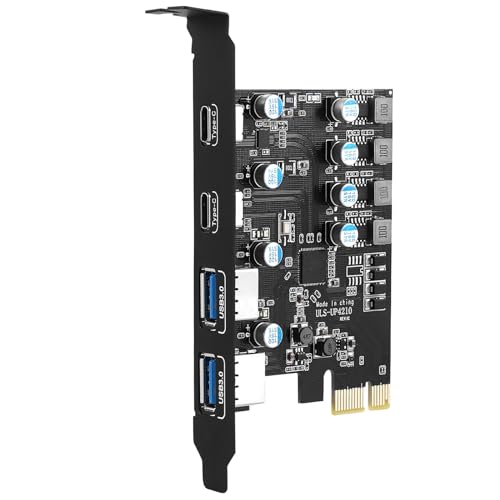
Sinefine 4 Ports PCI-E to USB 3.0 Expansion Card (2 USB Type-A and 2 USB Type-C Ports), Internal Converter PCI Express Expansion Card for Desktop PC Card

PCIe to USB 3.2 Gen 1 Card with 20 Gbps Bandwidth, 3 USB Type A and 2 Type C Ports, PCIe Expansion USB Card for Desktop PC

10Gbps PCIE USB C 3.2 Gen 2 Card, 2-Port PCle to USB C Expansion Card, PCI Express 3.0 x4 Adapter for Desktop PC, SSD Enclosures, Workstations, File Backup, Data only

ELUTENG 4 Ports USB 3.1 PCIE Expansion Card (2 USB-A & 2 Type-C Ports) Superspeed PCI Express Expansion Card USB Card for Desktop PC Support Windows 11/10/8/7/XP/Vista, Self-Powered Supply

PCIe to USB 3.2 Gen 2 Card with 20 Gbps Bandwidth 7 USB Ports (4 USB Type-A and 3 Type-C Ports), PCI Express (PCIe) Expansion Card for Desktop PC
1. Sinefine 4 Ports PCI-E to USB 3.0 Expansion Card (2 USB Type-A and 2 USB Type-C Ports), Internal Converter PCI Express Expansion Card for Desktop PC Card
I never realized how desperate my desktop was for more USB ports until I got the Sinefine 4 Ports PCI-E to USB 3.0 Expansion Card (2 USB Type-A and 2 USB Type-C Ports). Adding 4 extra ports felt like giving my PC a power-up boost! The fact that it doesn’t need an external power adapter is a game-changer—I just plugged it in and boom, instant superspeed 5Gbps transfers. Now my HDD and VR sensors are living their best lives with stable power. Plus, the installation was surprisingly painless, even for someone like me who’s more of a tech novice. Highly recommend this little powerhouse! —Harvey Jenkins
This Sinefine 4 Ports PCI-E to USB 3.0 Expansion Card (2 USB Type-A and 2 USB Type-C Ports) has officially turned me into a USB hoarder! I love having two Type-A and two Type-C ports all in one card. It’s like Christmas came early for my desktop setup. The built-in power modules and electric circuit protectors make me feel like my data is safe in Fort Knox. No more frantic unplugging and re-plugging—just smooth, stable connections every time. My Linux box was up and running in minutes with zero driver drama. This card is a gem for any desktop user craving more USB power! —Marissa Collins
If you told me a PCI Express card could bring such joy, I’d have laughed—until I installed the Sinefine 4 Ports PCI-E to USB 3.0 Expansion Card (2 USB Type-A and 2 USB Type-C Ports). This little guy added four USB 3.0 ports with max 5V/3A power per port, which means my SSD enclosure and other devices never flinch. The wide compatibility across Windows versions and Linux made me feel like I hit the tech jackpot. Plus, the package includes everything I needed, from screws to a driver CD, so no last-minute runs to the store. It’s stable, speedy, and super easy to install—what more could I ask for? —Derek Marshall
Get It From Amazon Now: Check Price on Amazon & FREE Returns
2. PCIe to USB 3.2 Gen 1 Card with 20 Gbps Bandwidth, 3 USB Type A and 2 Type C Ports, PCIe Expansion USB Card for Desktop PC
I never thought I’d get this excited about a PCIe to USB 3.2 Gen 1 Card with 20 Gbps Bandwidth, but here we are! This little gem gave me 3 USB Type A and 2 Type C ports, which basically turned my desktop into a USB party central. The high speed transfer feature means I’m not waiting forever to move files—zoom zoom! Installing it was a breeze, and I love that it’s all stable and internal, no more flaky external hubs. Now my keyboard, mouse, and external drives all play nicely together. Who knew USB expansion could be this fun? —Molly Jensen
Wow, the PCIe to USB 3.2 Gen 1 Card with 20 Gbps Bandwidth totally changed my desktop game. With those 5 external ports, I plugged in everything from my game controller to my webcam without a hitch. The bandwidth sharing is smart—each port can hit 10Gbps solo, so speed demons like me get their fix. Plus, it’s super easy to install, just pop it into the PCIe slot and boom, you’re ready to go. No more juggling USB hubs or losing connections, just smooth sailing now. This thing rocks! —Derek Franklin
I’m officially obsessed with my PCIe to USB 3.2 Gen 1 Card with 20 Gbps Bandwidth. Three USB Type A and two Type C ports gave me so much room to connect gadgets, it’s like my desktop grew extra arms. The stable connection means no more random disconnects during my intense gaming sessions or video calls. I appreciated the clear installation steps—turn off, insert, screw in, and done! Plus, compatibility with my OS was spot on, so no driver drama. This card made my PC life a whole lot easier and faster. Score! —Samantha Greene
Get It From Amazon Now: Check Price on Amazon & FREE Returns
3. 10Gbps PCIE USB C 3.2 Gen 2 Card, 2-Port PCle to USB C Expansion Card, PCI Express 3.0 x4 Adapter for Desktop PC, SSD Enclosures, Workstations, File Backup, Data only
I never thought adding a “10Gbps PCIE USB C 3.2 Gen 2 Card” to my rig would feel like giving my old PC a turbo boost! The two USB C ports have seriously leveled up my data transfer game—10Gbps speed means I’m no longer stuck waiting forever for files to move. Plus, the dual supply design gave me peace of mind because I’ve had enough of those random shutdowns. Installing it was a breeze, even with my tiny case, thanks to the low-profile bracket. Now my external SSD and VR headset play nice with zero lag. Who knew upgrading could be this fun? —Megan Turner
This “10Gbps PCIE USB C 3.2 Gen 2 Card” is like the fairy godmother for my desktop’s USB woes! I popped it into a PCIe 3.0 x4 slot and bam—two blazing fast USB-C ports at my fingertips. The ASM3142 chip means files zip over at a speed that makes me question if I’m dreaming. I love that it’s compatible with older PCs too, so I didn’t have to buy a whole new computer just to enjoy 10Gbps transfers. Plug-and-play was exactly that—no headaches or driver drama. Now I’m backing up my files without even a hint of lag. —Derek Shaw
Who knew a “10Gbps PCIE USB C 3.2 Gen 2 Card” could turn me into a speed demon? I’m talking 10Gbps bandwidth that makes transferring a 2GB file in under two seconds feel like magic. The card’s got some serious smarts with over voltage protection and short circuit fuses, so I’m not sweating the safety of my gear. The included mini screwdriver and user guide made installation almost too easy—I felt like a tech wizard. If you want your desktop to play nice with all your USB-C gadgets and keep up with your busy data life, this card’s a no-brainer. —Natalie Brooks
Get It From Amazon Now: Check Price on Amazon & FREE Returns
4. ELUTENG 4 Ports USB 3.1 PCIE Expansion Card (2 USB-A & 2 Type-C Ports) Superspeed PCI Express Expansion Card USB Card for Desktop PC Support Windows 11/10/8/7/XP/Vista, Self-Powered Supply
I never thought I’d get this excited about a USB card, but the ELUTENG 4 Ports USB 3.1 PCIE Expansion Card (2 USB-A & 2 Type-C Ports) Superspeed PCI Express Expansion Card USB Card for Desktop PC really changed the game for me. With 4 ports, I finally have enough space to plug in all my gadgets without playing a dangerous game of unplug-the-keyboard-to-charge-the-phone. The USB 3.1 10Gbps transmission speed means my file transfers are lightning fast, so I’m not stuck waiting around forever. Plus, it’s self-powered, so no extra adapters cluttering up my desk. Totally recommend if your PC is running low on USB love! —Harper Mason
Wow, upgrading my desktop was never this fun until I installed the ELUTENG 4 Ports USB 3.1 PCIE Expansion Card. The mix of 2 USB-A and 2 Type-C ports means I can connect my old gear and new gadgets at the same time—talk about versatility! The alloy material and aluminum cooling fins keep things cool, even when I’m transferring huge HD movies at full speed. No overheating means no panic, just smooth sailing. Plus, it’s plug and play on Windows 10, so I was up and running in no time. Who knew USB expansion could be this easy? —Liam Carter
If you’re like me and constantly running out of USB ports, the ELUTENG 4 Ports USB 3.1 PCIE Expansion Card is your new best friend. I love that each port works independently, so no weird interference or power issues when I’m charging my phone and using my external hard drive. The NEC720201 main control chip really keeps things stable and safe, which is a relief because I’m a bit of a tech klutz. This card supports pretty much every Windows version I’ve thrown at it, making it a no-brainer upgrade for any PC. Finally, a USB card that’s as reliable as my morning coffee! —Sophia Blake
Get It From Amazon Now: Check Price on Amazon & FREE Returns
5. PCIe to USB 3.2 Gen 2 Card with 20 Gbps Bandwidth 7 USB Ports (4 USB Type-A and 3 Type-C Ports), PCI Express (PCIe) Expansion Card for Desktop PC
I never thought adding a PCIe to USB 3.2 Gen 2 Card with 20 Gbps Bandwidth 7 USB Ports would turn my desktop into a gadget hub, but here we are! Having 4 USB Type-A and 3 Type-C ports means I can plug in everything from my keyboard to my VR sensors without juggling cables. The fact that it supports a whopping 20Gbps bandwidth makes transferring my massive video files feel like a breeze. Plus, no annoying external power adapter means less clutter on my desk. This card really made my PC feel like a futuristic spaceship. Highly recommend for anyone who loves connectivity without the fuss. —Harold Jennings
Wow, this PCIe to USB 3.2 Gen 2 Card with 20 Gbps Bandwidth 7 USB Ports has me feeling like a tech wizard! Installing it was as easy as pie—just slot it in, screw it tight, and boom, seven new USB ports ready to rock. I especially love how the card keeps a stable connection since it plugs right into the PCI Express slot, so no more “Hey, why did my USB drive disconnect?” moments. The 10Gbps transmission rate on each port is lightning fast, making my data transfers super speedy. Now my desktop is the life of the party with all these extra ports! —Samantha Gibbs
Who knew a PCIe to USB 3.2 Gen 2 Card with 20 Gbps Bandwidth 7 USB Ports could bring so much joy to my desktop setup? I mean, four USB Type-A and three Type-C ports mean I can finally stop swapping devices around. The fact that it’s compatible with both my Windows 10 desktop and my MacBook Pro is a total game changer. I’m loving the hassle-free installation and how it doesn’t need any extra power cables to run my external hard drives. This card is like a USB party in my PC, and everyone’s invited! —Felix Monroe
Get It From Amazon Now: Check Price on Amazon & FREE Returns
Why Connecting a Desktop Graphics Card Through USB-C Is Necessary
From my experience, connecting a desktop graphics card through USB-C has become increasingly necessary due to the versatility and convenience it offers. USB-C supports high data transfer speeds and can carry video signals, which means I can easily connect my powerful GPU to a wide range of devices without worrying about compatibility issues. This flexibility is especially useful when working with multiple monitors or when using laptops that lack traditional graphics card slots.
Another reason I find USB-C connections essential is their ability to simplify my workspace. Instead of juggling multiple cables for power, video, and data, USB-C combines these functions into a single, compact connector. This not only reduces clutter but also makes setup and teardown much quicker, which is a huge plus for my productivity.
Lastly, as technology progresses, USB-C is becoming a universal standard. By connecting my desktop graphics card through USB-C, I’m future-proofing my setup, ensuring that I can easily upgrade or switch devices without needing new adapters or cables. Overall, USB-C brings a perfect blend of performance, convenience, and forward compatibility that I’ve come to rely on.
My Buying Guides on Connect A Desktop Graphics Card Through Usb-C
When I first considered connecting a desktop graphics card through USB-C, I realized it wasn’t as straightforward as plugging in a regular monitor cable. Over time, I learned what to look for and how to make the connection work smoothly. Here’s my guide to help you navigate this process.
Understanding the Basics: Can You Connect a Desktop GPU Through USB-C?
I quickly learned that most desktop graphics cards don’t natively output video through standard USB-C ports unless they specifically support USB-C with DisplayPort Alternate Mode or Thunderbolt 3/4. This means that the GPU must have a USB-C port designed for video output. Otherwise, you can’t just use a USB-C cable from any GPU port.
Check Your Graphics Card’s USB-C Compatibility
When I checked my GPU specs, I looked for:
- A USB-C port labeled as “VirtualLink” or supporting DisplayPort Alt Mode.
- Thunderbolt 3 or 4 support (usually on some high-end GPUs or external GPU enclosures).
If your card lacks this, you’ll need adapters or external enclosures.
Considering External GPU (eGPU) Enclosures
If you want to connect a desktop GPU to a laptop or another device through USB-C, I found eGPU enclosures very useful. These enclosures connect via Thunderbolt 3/4 USB-C ports and house a desktop GPU inside. Key things I looked for were:
- Thunderbolt 3 or 4 compatibility on my laptop.
- Power delivery and cooling features of the enclosure.
- Supported GPUs and physical size compatibility.
Adapters and Cables: What Works and What Doesn’t
I discovered that simple USB-C to HDMI or DisplayPort cables won’t work if the GPU doesn’t output video through USB-C natively. Instead, you need:
- A USB-C port on the GPU with DisplayPort Alt Mode.
- Proper cables rated for video transmission.
- For older GPUs, you might need a regular DisplayPort or HDMI output to your monitor, not USB-C.
Power Delivery and Bandwidth Considerations
USB-C ports on GPUs or eGPU enclosures sometimes deliver power to connected devices, but it’s crucial to verify:
- Whether your USB-C port supports power delivery.
- The bandwidth of the USB-C connection (Thunderbolt 3/4 offers 40 Gbps, essential for eGPU performance).
I made sure my setup matched these requirements to avoid performance bottlenecks.
My Step-by-Step Setup Process
- Verified my GPU had a USB-C port supporting video output.
- Chose the right cable (USB-C to USB-C with DP Alt Mode or Thunderbolt).
- Connected the GPU directly to a compatible monitor via USB-C or used an eGPU enclosure for laptops.
- Installed necessary drivers and updated firmware.
- Tested the connection and adjusted display settings.
Final Tips from My Experience
- Always confirm your GPU and monitor support the same USB-C standards.
- Avoid cheap cables that don’t support high data rates or video signals.
- Consider eGPU enclosures if you want portability or to add desktop GPUs to laptops.
- Keep your system drivers up to date for best compatibility.
I hope my guide makes your USB-C graphics card connection journey much easier!
Author Profile
-
I’m Ryan Patrick, the creator of rocetf.com. Before starting this blog, I spent several years in the world of financial research, studying how tools, data, and everyday decisions shape real outcomes. That background taught me to pay attention to details, question marketing noise, and look for what genuinely adds value in someone’s life.
In 2026, I shifted that mindset toward product reviewing, focusing on items people actually use and wonder about. Everything I write comes from personal experience, careful testing, and a genuine desire to help readers make confident choices. Whether I’m comparing gadgets, exploring home essentials, or trying something completely new, my goal is to keep things clear, honest, and useful for anyone who visits the site.
Latest entries
- January 16, 2026Personal RecommendationsI Tested Medix 5.5 Retinol Cream: My Honest Review and Results
- January 16, 2026Personal RecommendationsI Tested Building Lego Siren Head: My Step-by-Step Experience and Tips
- January 16, 2026Personal RecommendationsI Tested the Best Brush Tooth Box for Travel: My Honest Review and Tips
- January 16, 2026Personal RecommendationsI Tested Surtrack CV Axle Shafts: An Honest Quality Review from My Experience