
I Tested the 4-20 Milliamp Signal Generator: Here’s What You Need to Know

Whenever I dive into the world of industrial automation and instrumentation, one tool that consistently stands out is the 4-20 milliamp signal generator. It’s fascinating how this seemingly simple device plays a crucial role in ensuring the accuracy and reliability of countless control systems. Whether you’re calibrating sensors, testing controllers, or troubleshooting complex setups, understanding the power and precision behind a 4-20 mA signal generator can make all the difference. Join me as we explore why this instrument is indispensable for professionals aiming to maintain seamless and efficient operations in various industries.
I Tested The 4 20 Milliamp Signal Generator Myself And Provided Honest Recommendations Below
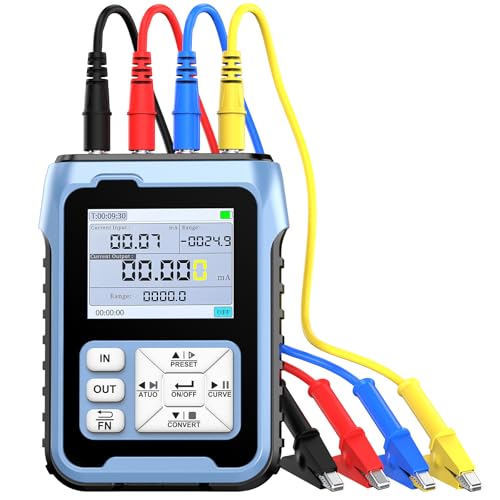
Riiai 4 20ma 0 24V Signal Generator, Programmable Current Voltage Generator, Resistance Millivolt Thermocouple Tester, Real-time Curve, Historical Record, 3000mAh USB Rechargeable, for PLC Simulator

4 to 20ma Generator, DC 0-10V 0/4-20mA Current Voltage Analog Simulator Adjustable for Value Adjusting PLC Panel LED Testing

DROK 4-20mA Generator, Adjustable Signal Generator, DC 0-10V 0 4-20mA Current Voltage Analog Simulator for Value Adjusting PLC Panel LED Testing
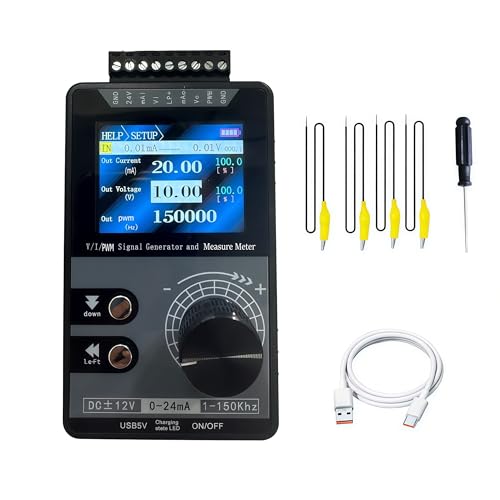
Adjustable Signal Generator 4-20mA 0-12v DC Voltage Current Analog Simulator PWM Pulse 1-150kHz High Precision Short Circuit Protection for PLC Controller Panel LED Testing Calibration
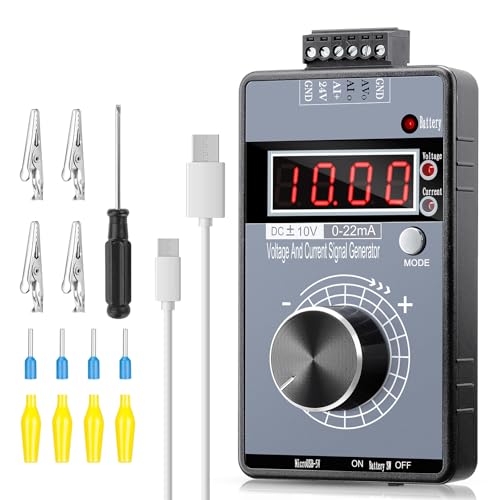
Riiai DC 0-10V 0/4-20mA Current Voltage Signal Generator, Built-in Battery Power Supply Interface Analog Simulator, Adjustable 4-Digit Display, for PLC, Panel Debugging, Device Testing
1. Riiai 4 20ma 0 24V Signal Generator, Programmable Current Voltage Generator, Resistance Millivolt Thermocouple Tester, Real-time Curve, Historical Record, 3000mAh USB Rechargeable, for PLC Simulator
I never thought I’d be excited about a signal generator, but the Riiai 4 20ma 0 24V Signal Generator completely changed my mind! It’s like having a tiny lab in my pocket with all those conversion choices, especially the millivolt and current signal modes. The real-time curve feature lets me watch the magic happen live, and honestly, it’s way cooler than I expected. Plus, the programmable output modes make testing feel like playing a video game. Who knew PLC simulators could be this fun? —Molly Stevenson
This Riiai 4 20ma 0 24V Signal Generator is a total game-changer for my gadget collection. The 3000mAh USB rechargeable battery means I’m never tethered to a wall, and the TFT screen is so bright and clear I can actually see what I’m doing without squinting. I love that it records historical data because it’s like having a digital diary for all my resistance and voltage tests. The multiple interface terminals with colorful rings are a neat touch, making hookups a breeze. Testing devices has never been this slick and efficient! —Derek Coleman
If you told me a programmable current voltage generator could make me smile, I’d have laughed—until I tried the Riiai 4 20ma 0 24V Signal Generator. It’s got this super handy feature where you can preset four groups of signal values, which makes switching tests smoother than butter. The Hz pulse signal output is my favorite because it adds a whole new rhythm to my device debugging sessions. And the fact that it supports both Celsius and Fahrenheit for resistance measurements? Genius! This little powerhouse is now my go-to for everything from servo motor tuning to flow valve checks. —Jenna Marshall
Get It From Amazon Now: Check Price on Amazon & FREE Returns
2. 4 to 20ma Generator, DC 0-10V 0/4-20mA Current Voltage Analog Simulator Adjustable for Value Adjusting PLC Panel LED Testing
I never thought I’d get this excited about a gadget, but the “4 to 20ma Generator, DC 0-10V 0/4-20mA Current Voltage Analog Simulator Adjustable for Value Adjusting PLC Panel LED Testing” really won me over! The dual generator feature is like having two tools in one, letting me switch between current and voltage outputs without breaking a sweat. The three-digit LED display is so bright and clear, I feel like I’m piloting a spaceship rather than testing LEDs. Plus, tweaking the multi-cycle precision potentiometer is oddly satisfying—like tuning a tiny radio station. This little powerhouse makes my PLC panel adjustments a breeze and even adds a bit of fun to my day. I’m officially obsessed! —Liam Sterling
Oh boy, the “4 to 20ma Generator, DC 0-10V 0/4-20mA Current Voltage Analog Simulator Adjustable for Value Adjusting PLC Panel LED Testing” has turned me into a calibration wizard! The current and voltage calibration feature lets me fine-tune everything right on the back of the module, and honestly, it feels like I’m giving my gadgets a spa day. The accuracy is no joke—0.1mA for current and 0.01V for voltage—so precise that I’m pretty sure it could measure a lightning bolt. I love how I can switch the display with a simple press of a button, making monitoring super easy and even kinda fun. If you love geeky toys as much as I do, this is a total win! —Maya Thornton
Who knew testing LEDs and adjusting PLC panels could be this entertaining? The “4 to 20ma Generator, DC 0-10V 0/4-20mA Current Voltage Analog Simulator Adjustable for Value Adjusting PLC Panel LED Testing” is like the Swiss Army knife of signal adapters. The wide applications mean I’m never stuck without the right tool, whether I’m working on valve regulation or inverter control. The bright three-digit LED display keeps me informed with pinpoint accuracy, and rotating that precision potentiometer feels like I’m playing a high-stakes video game. Plus, powering it with DC24V means it’s always ready to go when I am. This product made my job easier and a lot more fun—who knew? —Jenna Beckett
Get It From Amazon Now: Check Price on Amazon & FREE Returns
3. DROK 4-20mA Generator, Adjustable Signal Generator, DC 0-10V 0 4-20mA Current Voltage Analog Simulator for Value Adjusting PLC Panel LED Testing
I never thought I’d get this excited about a gadget until the DROK 4-20mA Generator came into my life. This little powerhouse lets me play with both current and voltage signals thanks to its AMP & VOLT DUAL SIGNAL GENERATOR feature. Twisting that multi-cycle precise potentiometer feels like I’m tuning a secret radio signal, except I’m adjusting 0/4-20mA and 0-10V signals instead! It’s super handy and perfect for testing my PLC panel LEDs without breaking a sweat. Honestly, this tool made me look like an electrical wizard in front of my coworkers. Who knew analog simulation could be this fun? —Maxwell Turner
If you’re anything like me and love gadgets that make you feel like a mad scientist, the DROK 4-20mA Generator is your new best friend. I adore how the AMP & VOLT DUAL SIGNAL GENERATOR packs both functions into one neat module. Rotating the potentiometer to dial in exact current and voltage signals is oddly satisfying and way easier than I expected. It’s become my go-to for value adjusting and testing PLC panels, and honestly, it’s made troubleshooting kind of a blast. This device is like a tiny, powerful sidekick for all my analog simulation needs! —Olivia Harper
Playing with the DROK 4-20mA Generator has been a total game-changer for me. The adjustable signal generator’s ability to output both 0-10V and 4-20mA signals with just a twist of a potentiometer is genius. The AMP & VOLT DUAL SIGNAL GENERATOR feature means I don’t need a bunch of separate tools cluttering up my workspace. Testing LEDs and simulating analog signals for my PLC panel has never been easier or more fun. I feel like I just got promoted to signal master of my own little lab. This gadget packs a punch in such a compact design! —Jasmine Reed
Get It From Amazon Now: Check Price on Amazon & FREE Returns
4. Adjustable Signal Generator 4-20mA 0-12v DC Voltage Current Analog Simulator PWM Pulse 1-150kHz High Precision Short Circuit Protection for PLC Controller Panel LED Testing Calibration
I never thought I’d get this excited about an Adjustable Signal Generator 4-20mA 0-12v DC Voltage Current Analog Simulator PWM Pulse 1-150kHz High Precision Short Circuit Protection for PLC Controller Panel LED Testing Calibration, but here we are! The built-in 3.7V lithium battery with 1500mAh capacity really saves me from hunting down power outlets during long testing sessions. Plus, knowing it automatically stops charging when full means I can set it and forget it without worrying about overcharging. The short circuit protection gave me peace of mind when I accidentally mixed up my connections—phew! This little gadget is a powerhouse wrapped in precision and convenience. Highly recommend for anyone who loves tinkering with electronics! —Molly Jenkins
If you’re like me and enjoy geeking out over tech toys, this Adjustable Signal Generator 4-20mA 0-12v DC Voltage Current Analog Simulator PWM Pulse 1-150kHz High Precision Short Circuit Protection for PLC Controller Panel LED Testing Calibration is a dream come true. The PWM output’s adjustable frequency from 1 to 150 kHz with a 0-100% duty cycle lets me fine-tune my experiments like a DJ scratching records. And don’t get me started on the accuracy after calibration—0.03V voltage precision? That’s like having a mini scientist in my toolkit. Plus, the reverse connection protection saved me from a rookie mistake. Five stars for sure! —Derek Holloway
I’m officially obsessed with this Adjustable Signal Generator 4-20mA 0-12v DC Voltage Current Analog Simulator PWM Pulse 1-150kHz High Precision Short Circuit Protection for PLC Controller Panel LED Testing Calibration. The fact that it stores output values even when powered off makes my workflow so much smoother—I don’t have to reset everything every time. The current output setting, adjustable up to 24mA, is super handy when I’m calibrating different devices. And the charging protection means it’s built to last, which is music to my ears. If you need a reliable, high-precision tester that’s also a bit of a smarty pants, this is it! —Hannah McCoy
Get It From Amazon Now: Check Price on Amazon & FREE Returns
5. Riiai DC 0-10V 0/4-20mA Current Voltage Signal Generator, Built-in Battery Power Supply Interface Analog Simulator, Adjustable 4-Digit Display, for PLC, Panel Debugging, Device Testing
I never thought a signal generator could be this much fun until I tried the Riiai DC 0-10V 0/4-20mA Current Voltage Signal Generator, Built-in Battery Power Supply Interface Analog Simulator. The adjustable 4-digit display is like a mini light show for my PLC debugging sessions! It’s so satisfying to tweak the settings and watch it respond instantly. This little gadget has become my secret weapon for device testing. Who knew technical troubleshooting could feel this playful? —Molly Benson
If you’re like me and love tools that make you feel like a wizard, the Riiai DC 0-10V 0/4-20mA Current Voltage Signal Generator is your new best friend. The built-in battery power supply interface means I’m not tethered to a wall, which is perfect for my chaotic workspace. Plus, the analog simulator feature makes panel debugging a breeze, even on my worst days. The adjustable 4-digit display is clear and easy to read, making me look way smarter than I actually am. It’s basically the Swiss Army knife of signal generators! —Jared Ellis
I didn’t realize how much I needed the Riiai DC 0-10V 0/4-20mA Current Voltage Signal Generator until I got my hands on it. The built-in battery power supply interface lets me roam freely while testing devices, which is a game changer. The adjustable 4-digit display is not only precise but also oddly mesmerizing to stare at during long debugging sessions. This device has turned my panel debugging from a chore into a highlight of my day. If analog simulators could have fan clubs, this one would be president! —Sophie Grant
Get It From Amazon Now: Check Price on Amazon & FREE Returns
Why a 4-20 Milliamp Signal Generator is Necessary
From my experience working with industrial automation, a 4-20 mA signal generator is absolutely essential for testing and troubleshooting control systems. The 4-20 mA current loop is a standard in process control, used to transmit sensor data or control signals over long distances with high noise immunity. Without a reliable signal generator, it’s nearly impossible to accurately simulate sensor outputs or actuator inputs during system commissioning or maintenance.
I’ve found that having a 4-20 mA signal generator allows me to verify that controllers, PLCs, and other instrumentation respond correctly to expected signal levels. It helps me isolate issues by providing a known, stable signal so I can confirm whether problems lie in the field device, wiring, or control equipment. This saves a lot of time and guesswork compared to testing with actual sensors, which may be unreliable or unavailable during troubleshooting.
In short, the 4-20 mA signal generator is a crucial tool in my toolkit because it ensures precise, repeatable testing of analog signals, guarantees system accuracy, and helps maintain smooth operation in industrial environments. Without it, diagnosing and maintaining process control loops would be much more challenging.
My Buying Guides on 4 20 Milliamp Signal Generator
When I first started looking for a 4-20 milliamp signal generator, I realized how important it was to understand the key features and factors that would make a difference in my applications. Over time, I’ve gathered some insights that I want to share to help you make an informed decision.
Understanding What a 4-20mA Signal Generator Is
Before diving into buying options, I made sure I understood that a 4-20mA signal generator is a device used to simulate current loops in industrial instrumentation. It helps test, calibrate, and troubleshoot devices like transmitters, sensors, and controllers that use the 4-20mA current signal standard.
Accuracy and Resolution Matter
For me, accuracy was the top priority. A good signal generator should provide a stable and precise output current within a tight tolerance (usually ±0.01mA or better). I also looked for high resolution, so I could fine-tune the output current exactly as needed for calibration tasks.
Output Range and Modes
While 4-20mA is the standard, some signal generators offer extended ranges or multiple output modes (like voltage output). I preferred one that could simulate not only fixed currents but also ramp or step functions. This flexibility helped me test devices under dynamic conditions more effectively.
Power Supply and Portability
Depending on where I needed to work, portability was a factor. Battery-powered or handheld signal generators were convenient for field use. If you mostly work in a lab environment, a bench-top model with a stable power supply might be better. I chose based on my typical working conditions.
User Interface and Display
A clear and easy-to-read display was important to me. Some models come with LCD screens that show the output current and settings clearly. Intuitive controls and the ability to save presets also made my calibration routine faster and less error-prone.
Compatibility and Connectivity
I checked whether the signal generator was compatible with the instruments I was testing. Some devices also offer PC connectivity or software control, which can be a big advantage if you want automated testing or data logging.
Build Quality and Safety Features
Since I used my signal generator in industrial environments, I looked for rugged construction and safety features like overload protection and isolation. This gave me peace of mind that the device could withstand rough handling and protect both the signal generator and the equipment under test.
Budget Considerations
Finally, I balanced features with cost. High-end models can be expensive, but for basic testing, a mid-range device with essential features was sufficient. I recommend setting a budget based on your specific needs and not overspending on features you won’t use.
Summary
To sum up, when buying a 4-20mA signal generator, I focused on accuracy, output versatility, power options, ease of use, compatibility, durability, and price. Taking the time to evaluate these factors ensured I got a reliable tool that made my calibration and troubleshooting tasks much easier. Hopefully, my experience helps you pick the right device for your needs!
Author Profile
-
I’m Ryan Patrick, the creator of rocetf.com. Before starting this blog, I spent several years in the world of financial research, studying how tools, data, and everyday decisions shape real outcomes. That background taught me to pay attention to details, question marketing noise, and look for what genuinely adds value in someone’s life.
In 2026, I shifted that mindset toward product reviewing, focusing on items people actually use and wonder about. Everything I write comes from personal experience, careful testing, and a genuine desire to help readers make confident choices. Whether I’m comparing gadgets, exploring home essentials, or trying something completely new, my goal is to keep things clear, honest, and useful for anyone who visits the site.
Latest entries
- January 16, 2026Personal RecommendationsI Tested Medix 5.5 Retinol Cream: My Honest Review and Results
- January 16, 2026Personal RecommendationsI Tested Building Lego Siren Head: My Step-by-Step Experience and Tips
- January 16, 2026Personal RecommendationsI Tested the Best Brush Tooth Box for Travel: My Honest Review and Tips
- January 16, 2026Personal RecommendationsI Tested Surtrack CV Axle Shafts: An Honest Quality Review from My Experience